18 till 20 August 2025 in Antwerpen (Belgium)
Nicholas of Cusa, the Arts and Polyphony : Working Through a Productive Non-Relation
"I saw myself as arriving in the back of an author and giving him a child that would be his own offspring, yet monstrous. It was really important for it to be his own child, because the author had to actually say all I had him saying. But the child was bound to be monstrous too, because it resulted from all sorts of shifting, slipping, breakages, and hidden emissions that I really enjoyed.” (Gilles Deleuze)
ABOUT
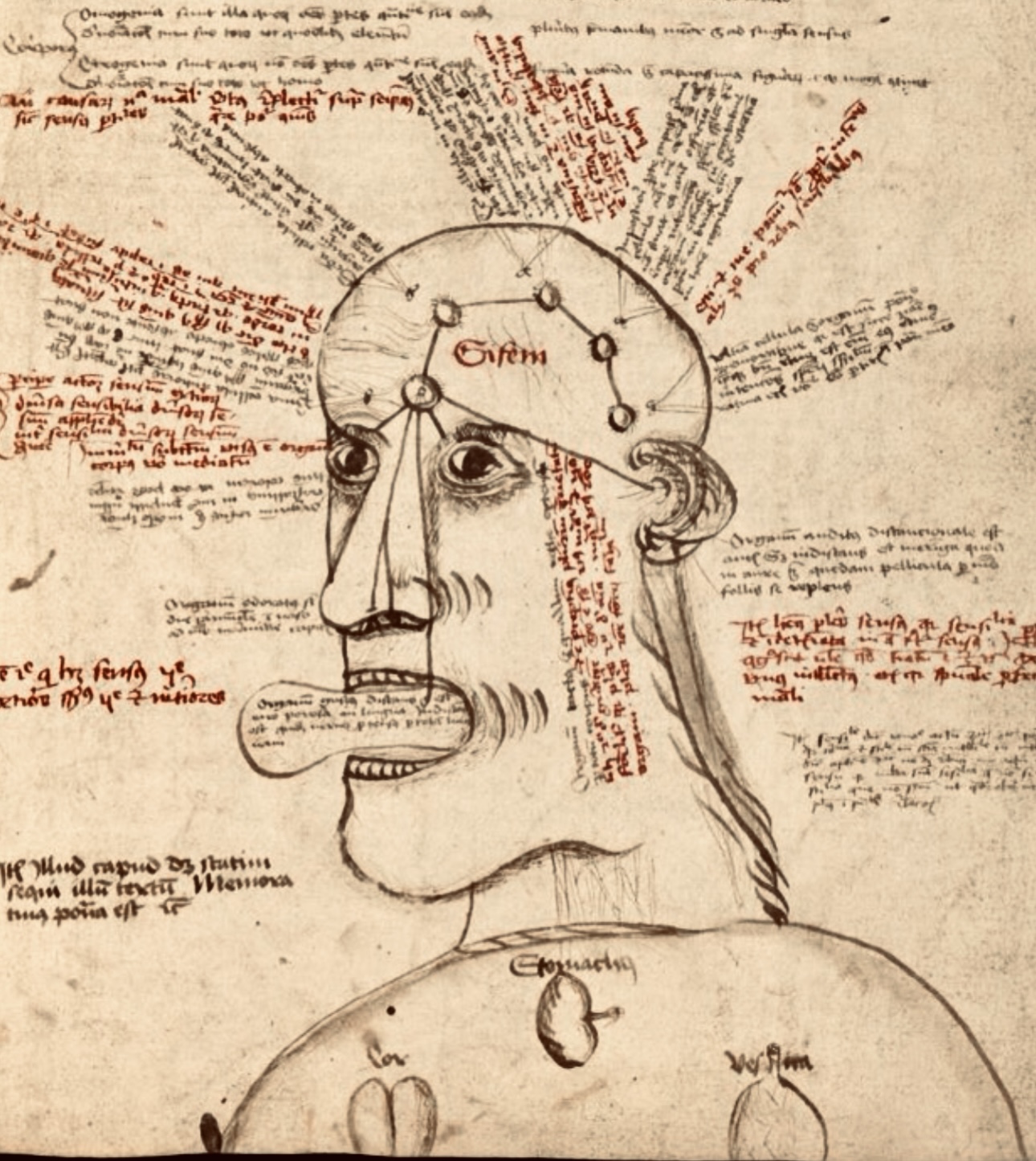
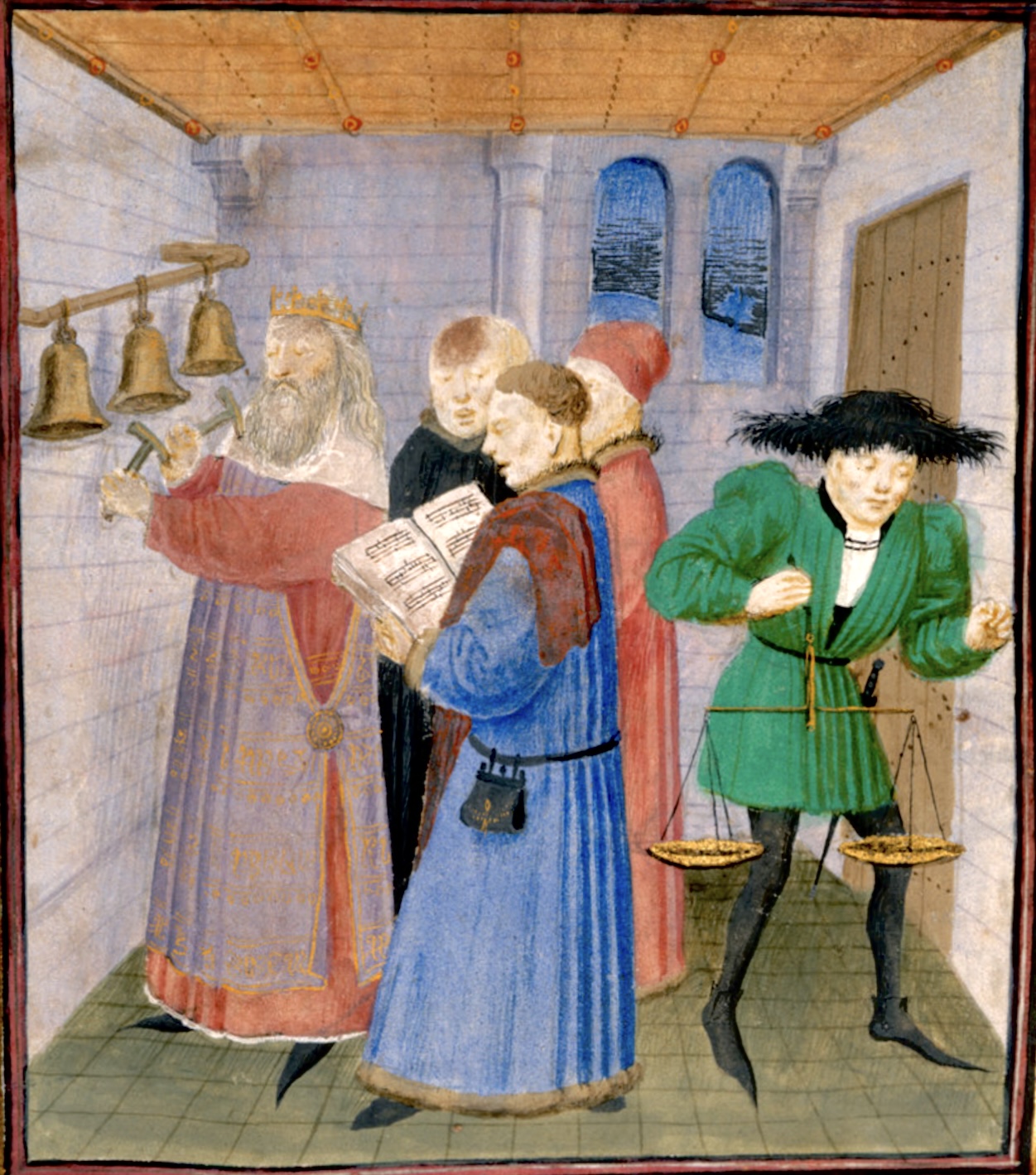
Cusanus is one of the most exciting and eccentric thinkers of the late Middle Ages bridging Neoplatonism and German Idealism. We explore the specificity of Cusanus' dialectical theology (which is his philosophy) that makes him radically modern, in order to explore this dimension in polyphony and other arts as well. Cusanus never theorized polyphony or the arts in a direct way. There seems not to exist any aesthetic theory or thinking about polyphony and the arts from that time. Nevertheless, polyphony and arts are dramatic structures of thinking. Polyphony as a practice is performed based on a totally quantified diagrammatic writing. However, they were considered “mechanical" arts and lacking a stable form on which to constitute thinking.
The unthought dramaturgy of aesthetic dialectics revealed in polyphony and visual arts resonates surprisingly with Cusa’s own thought.
Polyphony and the arts are the symptom of Nicholas of Cusa. We will explore the short-circuit between Cusanus and the arts and problematize historicist approaches as well.
WHAT
The seminar-sessions (one in the morning and two in the afternoon) will be lead by Björn Schmelzer, joined by Luís Neiva (Nova University Lisbon / Spirit is a Bone) and by Cusanus expert Inigo Bocken (Universities of Nijmegen and Leuven), with an intervention by Andrew Hallock (singer of Graindelavoix).
Bocken and Schmelzer are currently working on a book on the topic. Their research will provide the framework for the three days.
On 19 August the sessions will be interspersed with polyphonic performances as examples and study materials by four singers of Graindelavoix (Andrew Hallock, Albert Riera, Marius Peterson, Arnout Malfliet) engaged in the Cusanus project.
FOR WHOM
We welcome all students, researchers, scholars, artists and all interested folks in the domains of the arts, music, philosophy, art history, theology, anthropology and musicology a.o. to join us and think together!
The sessions will be in English.
PRACTICAL
The Cusanus Summer School takes place at Jos Smolderenstraat 76, 2000 Antwerpen (Nieuw-Zuid) on 18, 19 and 20 August 2025, from 11h till 18h.
Joining the Cusanus Summer School for three days : 50 euro (separate day: 20 euro)
Inscription: katrijn@graindelavoix.be
Information: info@graindelavoix.be
The Cusanus Summer School is a collaboration between Graindelavoix (Antwerpen) and Spirit is a Bone (Lisbon) and part of the Antwerp Summer Festival “Not Only Are We Not Infinite, We are Not Even Finite."
AANKONDIGING CUSANUS ZOMERSCHOOL: 18 tot en met 20 augustus 2025 in AntwerpenNicolaas van Cusa, de kunsten en polyfonie: de doorwerking van een productieve non-relatie."I saw myself as arriving in the back of an author and giving him a child that would be his own offspring, yet monstrous. It was really important for it to be his own child, because the author had to actually say all I had him saying. But the child was bound to be monstrous too, because it resulted from all sorts of shifting, slipping, breakages, and hidden emissions that I really enjoyed.” (Gilles Deleuze)
WAT
Cusanus is een van de meest opwindende en excentrieke denkers van de late middeleeuwen, die een brug slaat tussen het neoplatonisme en het Duitse idealisme.We onderzoeken de specificiteit van Cusanus' dialectische theologie (zijn filosofie) die hem radicaal modern maakt, om deze dimensie ook in polyfonie en andere kunsten te verkennen.Cusanus heeft polyfonie of de kunsten nooit rechtstreeks getheoretiseerd. Er lijkt geen esthetische theorie of denken over polyfonie en de kunsten uit die tijd te bestaan.Niettemin zijn polyfonie en de kunsten dramatische denkstructuren. Polyfonie als praktijk wordt uitgevoerd op basis van een volledig gekwantificeerde diagrammatische schriftuur. Ze werden echter beschouwd als "mechanische" kunsten en misten een stabiele vorm om het denken op te baseren.De ongedachte dramaturgie van esthetische dialectiek die zich manifesteert in polyfonie en beeldende kunsten resoneert verrassend met Cusa's eigen denken.Polyfonie en de kunsten zijn het symptoom van Nicolaas van Cusa. We zullen de kortsluiting tussen Cusanus en de kunsten onderzoeken en ook historicistische benaderingen problematiseren.HOE
De seminariesessies (één 's ochtends en twee 's middags) worden geleid door Björn Schmelzer, samen met Luís Neiva (Universidade Nova Lissabon / Spirit is a Bone) en Cusanus-expert Inigo Bocken (Universiteiten van Nijmegen en Leuven), met een interventie van Andrew Hallock (zanger bij Graindelavoix).Bocken en Schmelzer werken momenteel aan een boek over het onderwerp dat als kader dient voor de driedaagse sessies.Op 19 augustus worden de sessies afgewisseld met polyfone uitvoeringen als voorbeelden en studiemateriaal door vier zangers van Graindelavoix (Andrew Hallock, Albert Riera, Marius Peterson, Arnout Malfliet) die betrokken zijn bij het Cusanus-project. VOOR WIEWe nodigen alle studenten, onderzoekers, academici, kunstenaars en alle geïnteresseerden uit in de domeinen van kunst, muziek, filosofie, kunstgeschiedenis, theologie, antropologie en musicologie om deel te nemen en samen te denken!De sessies zijn in het Engels.PRAKTISCH
De Cusanus Zomerschool vindt plaats in de Jos Smolderenstraat 76, 2000 Antwerpen (Nieuw-Zuid) op 18, 19 en 20 augustus 2025, van 11u tot en met 18u.Deelname aan de Cusanus Summer School voor drie dagen: 50 euro (losse dag: 20 euro)Inschrijving: katrijn@graindelavoix.beInformatie: info@graindelavoix.beDe Cusanus Summer School is een samenwerking tussen Graindelavoix (Antwerpen) en Spirit is a Bone (Lissabon) en maakt deel uit van het Antwerpse Zomer Festival “Not Only Are We Not Infinite, We are Not Even Finite."