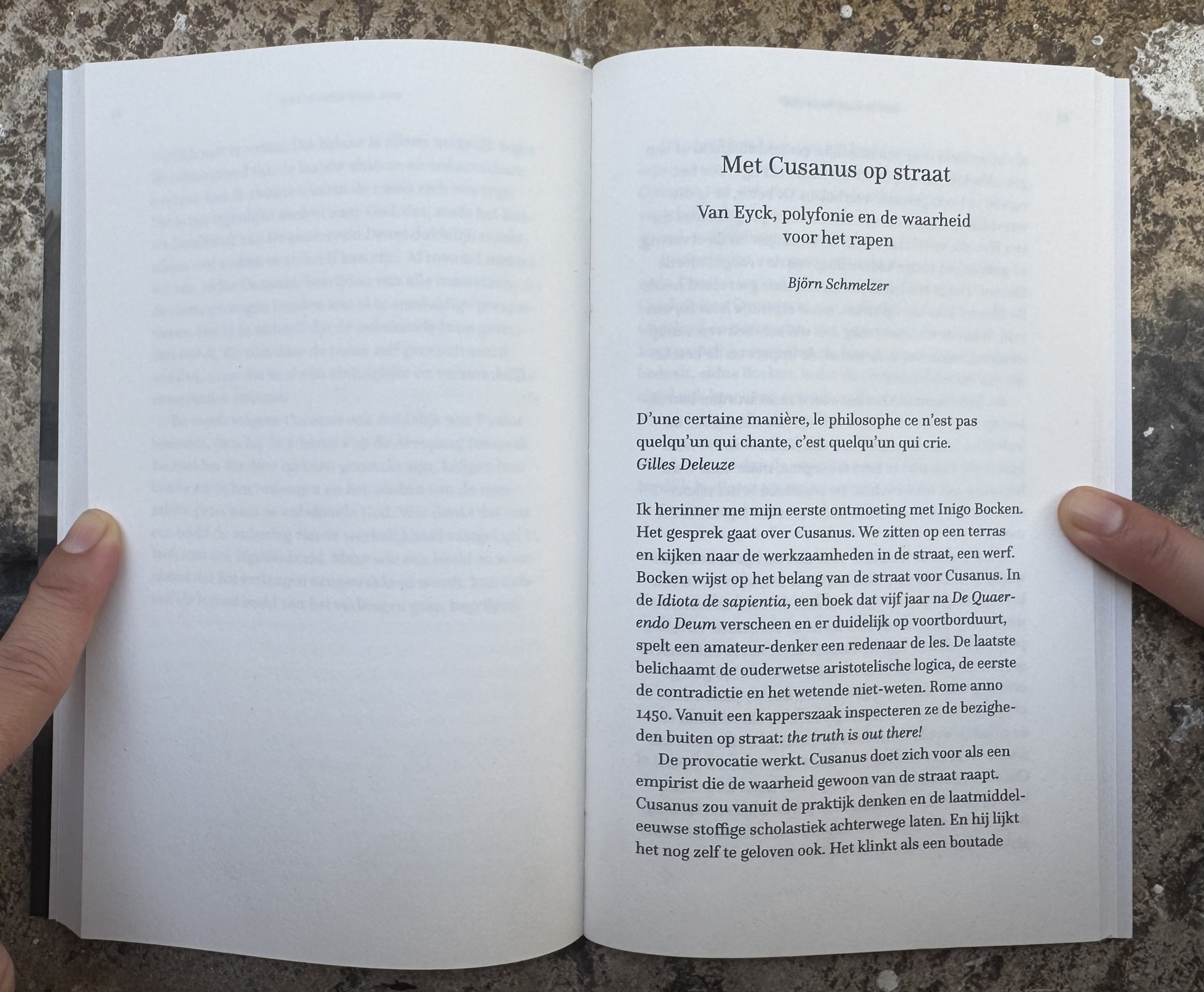
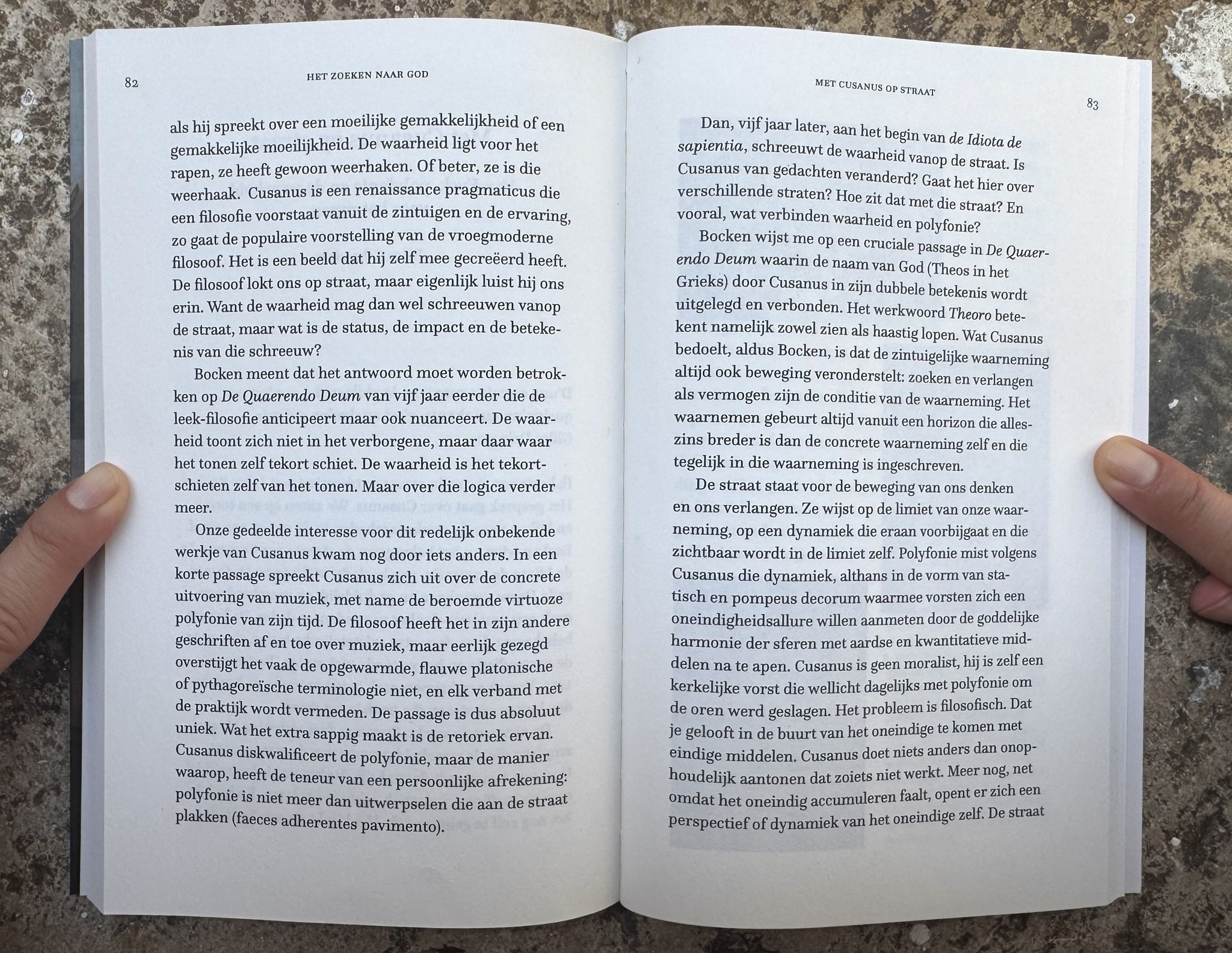
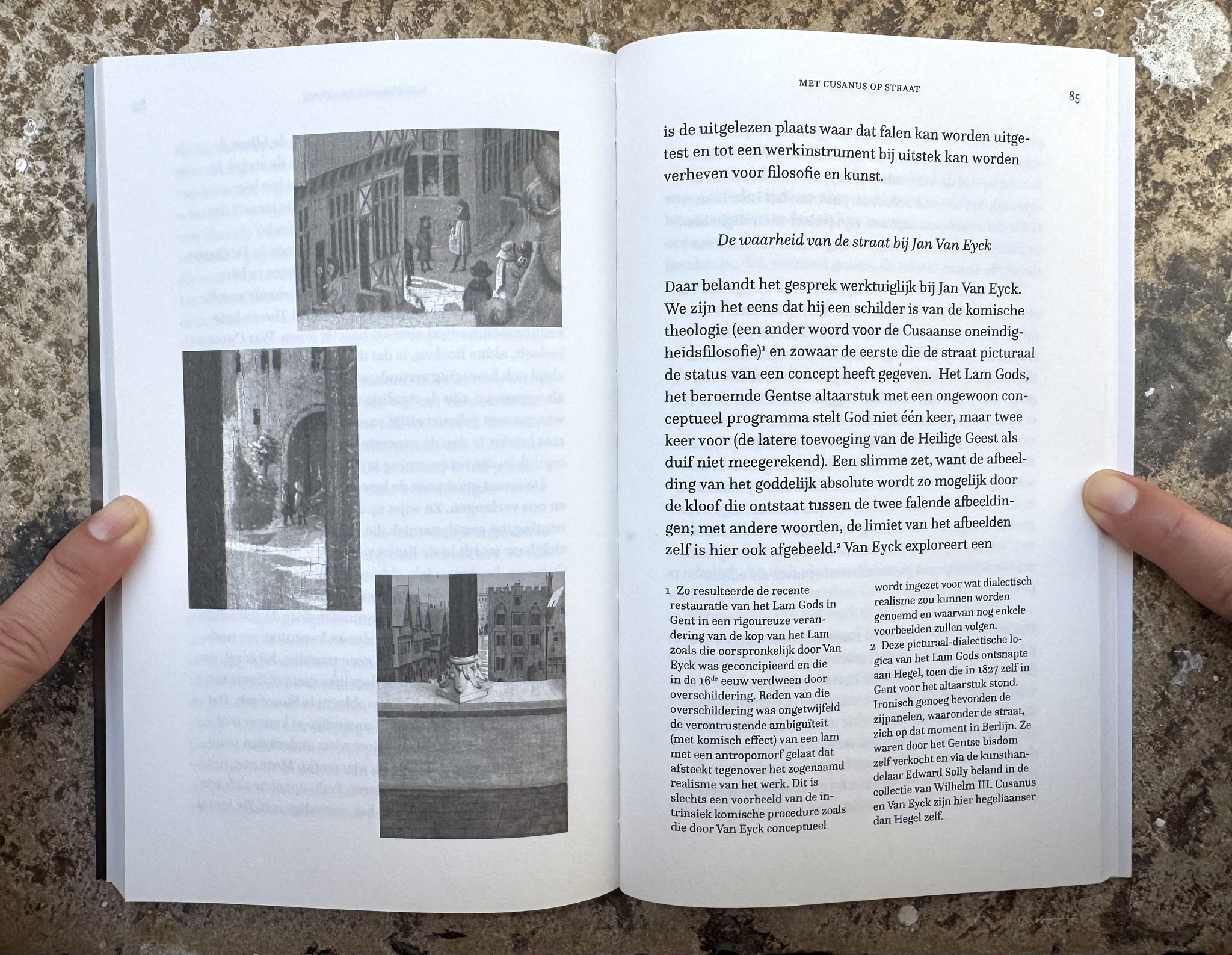
Björn Schmelzer schreef een essay bij de nieuwe Cusanusvertaling van Inigo Bocken:
"Met Cusanus op straat - Van Eyck, polyfonie en de waarheid voor het rapen."
Uitgegeven door Sjibbolet Amsterdam en te krijgen in elke boekhandel in Nederland en Vlaanderen:
https://uitgeverijsjibbolet.nl/op-komst-nicolaas-van.../
Naar aanleiding van het Deventer evenement in februari 2024 rond Cusanus & de polyfonie, vertaalde Inigo Bocken De Quaerendo Deum (Het zoeken naar God) in het Nederlands. Het boek wordt uitgegeven door de eigenzinnige uitgeverij Sjibbolet uit Amsterdam.
Het korte traktaat van Cusanus handelt over de zintuigen en het verstand en hun rol in de zoektocht naar het absolute en het oneindige.
Het is in die context dat Cusanus onverwacht scherp uithaalt naar de polyfonie en haar in het licht van het absolute vergelijkt met uitwerpselen die aan de straat vastkleven. Uiteraard is dit een kolfje naar de hand van Björn Schmelzer die gefascineerd geraakte door deze passage en in een uitgebreid essay aantoont dat er bij Cusanus geen morele of esthetische veroordeling van de polyfonie mee gemoeid is, zoals dat toen schering en inslag was (bijvoorbeeld bij Thomas a Kempis en de Moderne Devotie). Het is net omdat polyfonie zich vaak een allure van valse oneindigheid (bijvoorbeeld als harmonie van de sferen) aanmeet dat ze tekort schiet. Maar net deze kritiek is zinvol en opent het perspectief voor een toekomstige cusaanse musicologie.
Wie meer wil weten, kan het nieuwe boek vinden in elke betere boekhandel! En wie denkt dat het te zwaar op de hand is, met zijn 111 pagina’s is het de perfecte zomerlectuur evenals de beste voorbereiding voor de zomerschool!
https://uitgeverijsjibbolet.nl/op-komst-nicolaas-van-cusa-het-zoeken-naar-god/
Following the Deventer event in February 2024 around Cusanus & polyphony, Inigo Bocken translated De Quaerendo Deum (The search for God) into Dutch. The book is published by the idiosyncratic publisher Sjibbolet from Amsterdam. Cusanus' short treatise deals with the senses and Understanding and their role in the search for the absolute and the infinite. It is in this context that Cusanus unexpectedly takes a sharp swipe at polyphony and compares it, in the light of the absolute, to excrement that sticks to the street. Of course, this is right up Björn Schmelzer’s alley, who was fascinated by this passage and who demonstrates in an extensive essay that Cusanus is not concerned with a moral or aesthetic condemnation of polyphony, as was the norm at the time (for example in Thomas a Kempis and the Modern Devotion). It is precisely because polyphony often assumes an allure of false infinity (for example as harmony of the spheres) that it falls short. But it is precisely this criticism that is meaningful and opens up the perspective for a future Cusan musicology. Anyone who wants to know more can find the new book in any good bookshop in Flanders or the Netherlands! And anyone who thinks the subject is too heavy-handed, with its 111 pages the book is perfect to impress at the swimming pool and a great preparation for the Summer School!
https://uitgeverijsjibbolet.nl/op-komst-nicolaas-van-cusa-het-zoeken-naar-god/